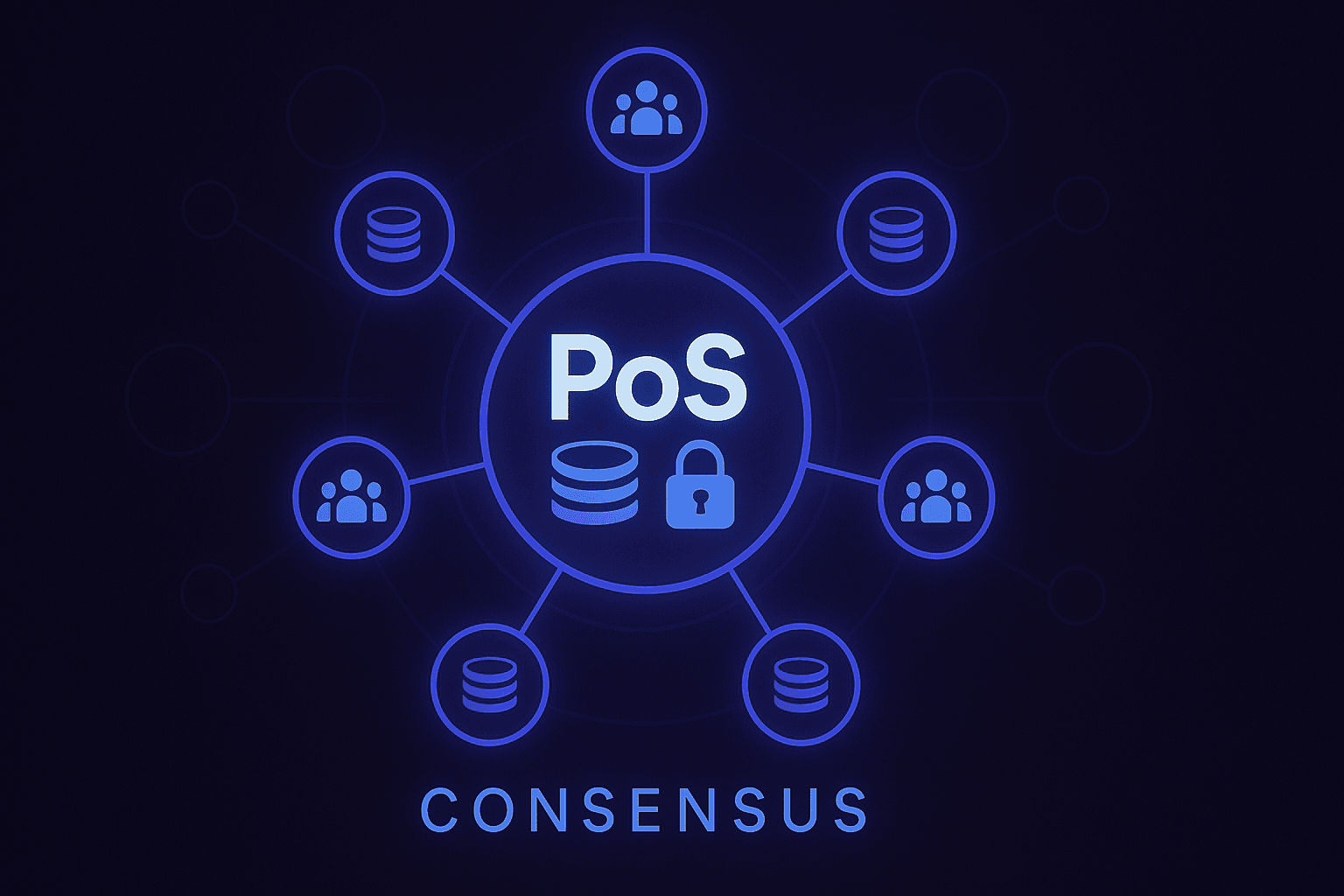
Explaining Proof of Stake Like You're 5 Years Old
#The Big Problem: Who Gets to Approve Transactions?
#Imagine a classroom where kids vote on class rules.
- Some kids are louder and try to vote more than once
- Some don't care and don't vote at all
- The teacher (blockchain) has to figure out which votes count
This is how blockchains work—they need a fair way to choose who gets to approve transactions.
The Old Way: Proof of Work (PoW) (Bitcoin & Old Ethereum)
#Before Solana, blockchains used Proof of Work (PoW)—which is like a push-up contest.
- Whoever does the most push-ups (solves math problems) gets to approve transactions
- The stronger (more computers) you are, the more you win
- Problem: This wastes a lot of energy and slows things down
The New Way: Proof of Stake (PoS) (Solana & Ethereum 2.0)
#Solana uses Proof of Stake (PoS)—which is like a raffle instead of a contest.
- Everyone gets tickets (stakes SOL tokens) to enter a lottery
- The more tickets you have, the higher your chances of winning
- Winners get to approve transactions and earn SOL rewards
This is much faster and uses way less energy!
How Validators & Staking Work
#- Validators – The ones who check transactions and keep the system running
- Stakers – People who lock up SOL to support the network
- Rewards – Validators earn SOL as a reward for keeping things secure
The more SOL you stake, the higher your chances of being chosen to validate transactions.
Why Proof of Stake Makes Solana Better
#- No energy waste – No push-up contests, just a fair system
- Fast approvals – No need to solve math puzzles—transactions happen instantly
- Fair rewards – People who help the network get paid in SOL
This system lets Solana handle 65,000+ transactions per second!
Summary: Proof of Stake in Simple Terms
#- Old blockchains (Bitcoin) use energy-heavy competitions (PoW)
- Solana picks validators like a lottery (PoS), making it faster & cheaper
- People stake SOL to help secure the network and earn rewards
- This system makes Solana scalable and energy-efficient!
Context & Problem Statement (Technical Deep Dive)
#(Reference: Solana Whitepaper, Section 5, Pages 14-19)
Traditional Proof of Work (PoW) systems like Bitcoin face fundamental limitations that prevent them from achieving the scale and efficiency required for mainstream adoption. The energy consumption, slow finality, and limited throughput of PoW systems create barriers to practical blockchain applications.
Ethereum's transition to Proof of Stake (PoS) demonstrated that alternative consensus mechanisms could address these issues while maintaining security. However, Solana takes PoS further by combining it with Proof of History (PoH) to create a consensus system optimized for high throughput and low latency.
The challenge isn't just about energy efficiency—it's about creating a consensus mechanism that can scale to handle thousands of transactions per second while maintaining decentralization and security. Solana's PoS implementation solves this by leveraging PoH's timestamping capabilities to eliminate the communication overhead that typically limits PoS performance.
Why Does Solana Use Proof of Stake (PoS)?
#In traditional Proof of Work (PoW) systems like Bitcoin, miners compete to solve complex puzzles to validate transactions. However, this system:
- Consumes enormous energy (Bitcoin mining farms use as much electricity as small countries)
- Has slow transaction finality (each block takes 10 minutes)
- Lacks scalability (Bitcoin handles only ~7 transactions per second)
Ethereum moved to Proof of Stake (PoS) to address these issues, and Solana takes PoS further by combining it with Proof of History (PoH).
What is Proof of Stake (PoS)?
#Instead of using miners, PoS blockchains use validators, who are chosen to confirm transactions based on how many tokens they stake (lock up).
- The more SOL tokens a validator stakes, the higher their chances of being selected to validate transactions
- Validators earn rewards (transaction fees + new SOL tokens) for securing the network
"This specific instance of Proof of Stake is designed for quick confirmation of the current sequence produced by the Proof of History generator."
– (Solana Whitepaper, Page 14)
Validator Economics & Requirements
#Minimum Stake Requirement for Validators
#While Solana does not enforce a strict minimum amount of SOL to operate a validator, there are inherent costs associated with participation:
- Vote Account Rent-Exemption: To engage in consensus, validators must maintain a vote account, which requires a rent-exempt reserve of approximately 0.02685864 SOL
- Voting Transaction Costs: Validators are responsible for submitting vote transactions for each block they validate. This activity can incur costs of up to 1.1 SOL per day
Therefore, while there's no official minimum stake, validators should ensure they have sufficient SOL to cover these operational expenses.
Validator Rewards: Transaction Fees and New SOL Tokens
#Validators earn rewards through:
- Transaction Fees: Collected from users initiating transactions on the network
- Newly Minted SOL (Inflation Rewards): Distributed as part of Solana's inflation mechanism, which started at an initial rate of 7-9% and is designed to decrease over time, stabilizing at a long-term rate of 1-2%
The total rewards a validator receives are influenced by their uptime, voting performance, and the amount of SOL staked (both self-staked and delegated)
How Solana's PoS Works (Step-by-Step)
#Solana's PoS mechanism ensures security, fast finality, and fair elections.
Step 1: Bonding – Becoming a Validator
#- Validators must stake SOL tokens as a form of commitment
- These tokens are locked in a special bonding account and cannot be used for other purposes
"A bonding transaction takes an amount of coin and moves it to a bonding account under the user's identity."
– (Solana Whitepaper, Page 15)
Practical Example:
To become a validator on Solana:
- Set Up Hardware: Ensure you have the necessary hardware, such as a server with high-speed internet connectivity
- Install Validator Software: Download and install Solana's open-source validator software
- Create Identity: Generate a unique validator identity (public and private keys)
- Stake SOL Tokens: Transfer SOL tokens into a bonding account associated with your validator identity. While there's no strict minimum stake required, participating effectively in consensus requires covering operational costs, such as vote transaction fees, which can amount to approximately 1.1 SOL per day
- Register Vote Account: Create and fund a vote account with a rent-exempt reserve of 0.02685864 SOL to participate in the voting process
- Start Validating: Once set up, your validator will begin participating in the consensus process by validating transactions and producing blocks
Step 2: Voting on Transactions
#- The Leader (selected through PoH) processes transactions and sends them to Verifiers (other validators)
- Verifiers vote by confirming the Leader's work
- Votes are recorded on the blockchain
"Each bonded identity must confirm that signature by publishing their own signed signature of the state."
– (Solana Whitepaper, Page 15)
Practical Example:
In practice:
- Leader Selection: A validator is chosen as the Leader based on the PoH mechanism
- Transaction Processing: The Leader sequences and processes incoming transactions, creating a block
- Broadcast: The Leader broadcasts the proposed block to all validators
- Verification: Each validator verifies the block's validity and signs it if correct
- Voting: Validators submit their votes (signed confirmations) back to the network
- Finalization: Once a supermajority (over 66%) of votes is achieved, the block is finalized and added to the blockchain
Step 3: Unbonding – Exiting the Validator Role
#- Validators who wish to leave can unstake their SOL after a waiting period
- If a validator fails to vote for too long, their stake is marked as stale and can be removed
"Missing N number of votes marks the coins as stale and no longer eligible for voting."
– (Solana Whitepaper, Page 15)
Practical Example:
To stop being a validator:
- Initiate Unstaking: Submit an unstaking transaction to begin the unbonding process
- Waiting Period: Serve a cooling-down period (typically one epoch, approximately 2 days) during which your tokens remain locked
- Withdrawal: After the waiting period, retrieve your unstaked SOL tokens, which are now free to use or transfer
Implications of Failing to Vote:
If a validator becomes inactive and misses a significant number of votes, their stake may be considered stale, leading to removal from the active validator set. This mechanism ensures that only active and reliable validators participate in consensus.
Validator Elections: How Leaders Are Chosen
#Since Solana is a leader-based blockchain, there must always be one active Leader responsible for sequencing transactions.
Election Process
#- Validators vote to elect a new Leader
- The validator with the largest voting power (most SOL staked) is chosen
- If two validators have the same stake, the one with the highest public key address is selected
"Election for a new PoH generator occurs when the PoH generator failure is detected."
– (Solana Whitepaper, Page 15)
If the Leader fails or behaves maliciously, a new Leader is elected immediately.
Practical Example:
- Leader Failure Detection: The network detects that the current Leader is unresponsive or acting maliciously
- Initiate Election: Validators participate in an election process to select a new Leader
- Selection Criteria: The validator with the highest stake is chosen as the new Leader. In case of a tie, the validator with the higher public key address is selected
- Transition: The new Leader takes over transaction processing responsibilities without disrupting the network's operation
Slashing: Punishing Bad Validators
#To prevent validators from cheating or being lazy, Solana implements slashing, which removes part or all of a validator's staked SOL if they:
- Try to approve conflicting transactions
- Attempt to fork the network
- Vote twice on different chains
"Slashing occurs when a validator votes two separate sequences. A proof of malicious vote will remove the bonded coins from circulation and add them to the mining pool."
– (Solana Whitepaper, Page 16)
This ensures validators stay honest and work for the security of the network.
Practical Examples of Slashing:
Double Voting Attack:
- A validator tries to vote on two different blockchain forks simultaneously
- The network detects this through cryptographic proof
- The validator's entire stake is slashed and redistributed to honest validators
Conflicting Transaction Approval:
- A validator approves two transactions that conflict with each other
- The network identifies the contradiction
- The validator faces slashing penalties proportional to the severity of the violation
Network Fork Attempt:
- A validator attempts to create an alternative blockchain history
- Other validators detect the fork attempt
- The malicious validator's stake is slashed to prevent network disruption
Secondary Elections & Fallbacks
#To prevent network failures, Solana has a Secondary Leader system:
- A backup Leader is pre-selected. Both primary and backup leaders are chosen using the same method, ensuring a seamless transition in case of failure
- If the main Leader fails, the Secondary Leader takes over immediately
- This prevents long downtime or delays
"Once a PoH generator is established, a Secondary can be elected to take over the transactional processing duties."
– (Solana Whitepaper, Page 17)
This reduces disruptions and ensures that transactions keep flowing smoothly.
How Solana Handles Network Failures (Partition Recovery)
#When part of the network disconnects or fails, Solana follows a dynamic unstaking process to allow the remaining validators to recover control.
Partition Recovery Process
#- If validators drop below ⅔ of the total stake, unstaking speeds up
- If validators drop below ½, unstaking slows down to prevent manipulation
- The system waits until enough validators come back online
"Full ⅔ consensus will not be achieved until a very large amount of hashes have been generated and the unavailable verifiers have been unstaked."
– (Solana Whitepaper, Page 18)
This ensures that hacked or disconnected validators cannot disrupt the blockchain permanently.
Finality: How Long Until Transactions Are Fully Confirmed?
#Finality is the point where a transaction cannot be reversed.
How Solana Ensures Fast Finality
#- PoH timestamps transactions instantly
- Validators must confirm transactions within 500 milliseconds
- Every vote is recorded on the blockchain, allowing instant auditability
"Since each verification is entered into the stream, everyone in the network can validate that every verifier submitted their votes within the required timeout."
– (Solana Whitepaper, Page 19)
Comparison: Solana vs. Other Blockchains
#| Blockchain | Finality Time |
|---|---|
| Bitcoin | 10-60 minutes |
| Ethereum | 1-5 minutes |
| Solana | Less than 1 second |
Solana achieves sub-second finality, making it ideal for real-time applications like trading, payments, and gaming.
Attacks & Security Considerations
#Nothing-at-Stake Problem
#Validators might try to vote on multiple forks to maximize rewards.
- Solana prevents this with slashing penalties
Collusion with the Leader
#A validator could work with the Leader to confirm fake transactions.
- Solana defends against this by randomizing Leader elections
Censorship Attacks
#Validators might try to block certain transactions.
- The network can fork and remove dishonest validators
"Proof of History generator would have to continue generating a sequence, to prove the passage of time, until enough Byzantine bonds have become stale."
– (Solana Whitepaper, Page 19)
Conclusion & What's Next
#Key Takeaways
#- Proof of Stake (PoS) allows Solana to be energy-efficient while ensuring security
- Validators stake SOL to participate in the network and earn rewards
- Slashing prevents malicious behavior, making Solana highly secure
- Solana's finality is nearly instant, making it much faster than Bitcoin and Ethereum
What's Next
#In the next section, we'll cover Proof of Replication (PoRep)—how Solana ensures that all blockchain data is securely stored and verifiable.
The Proof of Stake consensus mechanism we've explored today provides the economic incentives and security model that enables Solana's high-performance blockchain. By combining PoS with PoH, Solana creates a consensus system that is both energy-efficient and capable of processing thousands of transactions per second while maintaining decentralization and security.
This article is part of the Solana Whitepaper Series. Read Part 1: Introduction & Core Idea | Read Part 2: Network Design | Read Part 3: Proof of History | Read Part 5: Proof of Replication (Coming Soon)