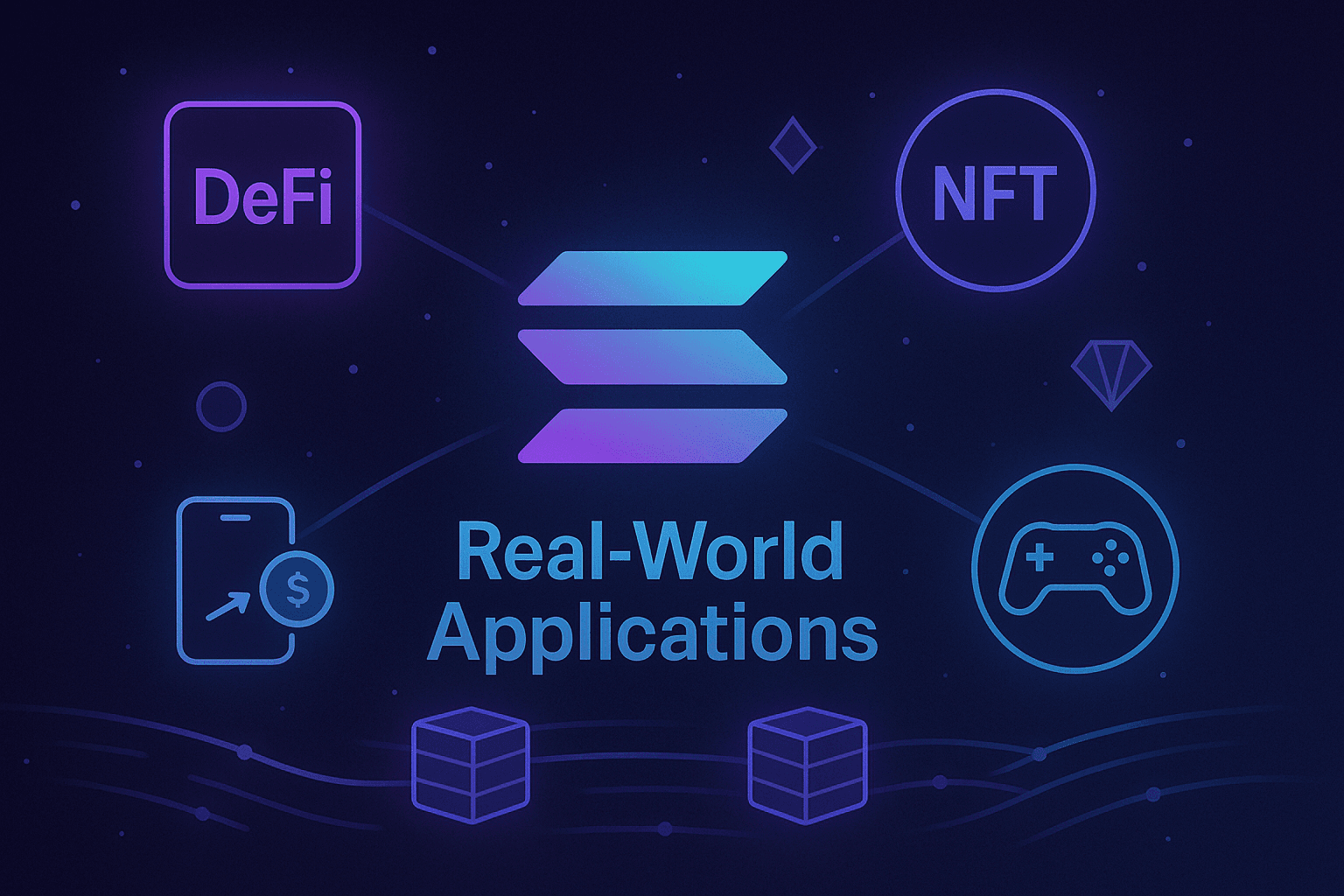
Explaining Real-World Applications Like You're 5 Years Old
#Solana is Like the Fastest Playground Ever
#Imagine Solana is a super cool playground where kids can:
- Ride roller coasters → (Trade crypto and send money)
- Play arcade games → (Use NFTs and gaming apps)
- Run a lemonade stand → (Use DeFi to earn money)
Solana makes everything super fast and cheap, so you never have to wait in line or pay huge fees.
DeFi: Solana's "Kid Bank"
#What is DeFi? Imagine a bank run by kids where:
- You don't need adults (banks) to trade money
- You can borrow or lend toys (crypto) anytime
- No one tells you what you can or can't do
Why Solana's DeFi is the Best:
- Instant payments – No waiting for your money
- No high fees – You don't need to give half your money to the bank
- Works for everyone – Even kids with only a little pocket change can use it
NFTs: Digital Stickers & Trading Cards
#What are NFTs? NFTs are special stickers or trading cards that only one person can own.
- Art NFTs – Like a digital Mona Lisa that you can own
- Game NFTs – Items you can trade between games
- Music NFTs – Buy a song and prove you own it
Why People Love Solana NFTs:
- Cheap minting – You can make NFTs for pennies, instead of spending $50 like on Ethereum
- Instant trading – If you sell an NFT, the new owner gets it right away
Imagine if you owned a Pokémon card digitally and could trade it with a kid across the world instantly—that's NFTs on Solana.
Gaming: Play-to-Earn with Real Money
#What if Your Game Items Were Real?
- What if your Fortnite skins, Minecraft swords, or FIFA players were real things you owned?
- You could sell them for real money or use them in different games
Why Solana Works for Gaming:
- Fast transactions – No lag, no delays
- Cheap in-game purchases – Buy items for fractions of a cent
- Play-to-Earn – Earn real money just by playing games
Imagine if you could win coins in a game and buy a real pizza with them—that's gaming on Solana.
Payments: Sending Money Without Banks
#How Solana Fixes Money Transfers:
- Banks take days to send money
- PayPal and Visa charge fees
- Solana lets you send money instantly for almost free
Why Businesses Like Solana:
- Stablecoins (crypto dollars) can be used for payments
- No bank approval needed
- Works worldwide in seconds
Imagine being able to send $5 to a friend in another country instantly, without needing a bank or PayPal—that's Solana payments.
New 2025 Superpowers
#🤖 AI Integration – AI bots that help you trade and manage your crypto automatically
🌐 Real Infrastructure – Solana powers actual wireless networks and IoT devices
🛠️ Easy Development – Anyone can build on Solana with simple tools
Why Solana is the Future of Web3
#- DeFi = No banks, just instant money movement
- NFTs = Digital collectibles you actually own
- Gaming = Earn real money while playing
- Payments = Send money instantly, no middlemen
- AI = Smart bots that help you automatically
- Infrastructure = Real-world networks powered by blockchain
Solana is not just for crypto geeks—it's making finance, gaming, digital ownership, AI, and real-world infrastructure faster and easier for everyone.
Context & Problem Statement (Technical Deep Dive)
#(Reference: Solana Whitepaper, Section 10, Pages 42-46)
Solana isn't just a faster blockchain—it's designed to power real-world applications that require:
- High-speed transactions (instant payments, trading, gaming)
- Low costs (cheap fees for microtransactions)
- Scalability (can handle millions of users at once)
This makes Solana the go-to blockchain for industries like:
- Decentralized Finance (DeFi) – Trading, lending, borrowing
- NFTs & Digital Collectibles – Art, gaming, music
- Gaming & Metaverse – Play-to-earn economies
- Payments & Stablecoins – Fast, low-cost global transfers
"Solana's architecture enables real-world applications by combining high-speed execution with low transaction fees, making it viable for large-scale adoption."
– (Solana Whitepaper, Page 42)
Traditional blockchain applications face fundamental limitations that prevent mainstream adoption. High fees, slow transaction times, and limited scalability create barriers that make blockchain technology impractical for everyday use.
Solana's whitepaper presents a revolutionary solution: what if we could create a blockchain that processes transactions at the speed of traditional financial systems while maintaining decentralization? What if we could enable applications that require real-time interaction and microtransactions?
DeFi on Solana: The Fastest Financial System
#A. What is DeFi?
#DeFi (Decentralized Finance) removes banks from the equation and allows users to:
- Trade crypto without middlemen (DEXs like Raydium, Orca)
- Lend and borrow instantly (Solend, Mango Markets)
- Earn passive income (staking, liquidity pools)
Core DeFi Applications:
- Decentralized Exchanges (DEXs) – Peer-to-peer trading without intermediaries
- Lending Protocols – Borrow and lend crypto assets
- Yield Farming – Earn rewards by providing liquidity
- Derivatives – Trade futures, options, and synthetic assets
- Insurance – Protect against smart contract risks
B. Why is Solana Great for DeFi?
#- Low Fees – You don't need to pay $20 per trade like on Ethereum
- Fast Execution – No waiting minutes for transactions to finalize
- Scalability – Can handle thousands of trades per second
"Solana's high-throughput system enables decentralized exchanges to function at speeds comparable to traditional finance."
– (Solana Whitepaper, Page 43)
Example: A Solana DEX (Raydium) processes over 100,000 trades per second—something Ethereum-based DEXs can't do.
DeFi Ecosystem on Solana
#Major DeFi Protocols:
- Jupiter – Leading trading aggregator that finds best prices across all Solana markets
- Raydium – Automated market maker (AMM) with perpetual trading and token launches
- Kamino Finance – Rapidly growing lending and trading protocol with significant TVL
- Orca – User-friendly DEX with concentrated liquidity
- Solend – Lending protocol for crypto assets
- Mango Markets – Decentralized trading platform
DeFi Advantages on Solana:
- Sub-second finality enables high-frequency trading
- Low fees make small trades economically viable
- High throughput supports complex DeFi strategies
- Composability allows protocols to integrate seamlessly
NFTs & Digital Collectibles on Solana
#A. What Are NFTs?
#NFTs (Non-Fungible Tokens) are unique digital assets stored on a blockchain. These include:
- Artwork – Digital paintings, 3D art
- Game Items – Skins, weapons, characters
- Music & Videos – Exclusive content, concert tickets
NFT Characteristics:
- Uniqueness – Each NFT is one-of-a-kind
- Ownership – Provable ownership on the blockchain
- Transferability – Can be bought, sold, or traded
- Immutability – Ownership records cannot be altered
B. Why is Solana a Great NFT Blockchain?
#- Minting Fees are Almost Free – While minting an NFT on Ethereum costs $50+, minting on Solana costs less than a cent
- Instant Trading – No waiting for transactions to confirm
- Built-in NFT Standards – Solana supports Metaplex, a protocol that makes NFT creation easy
"Solana's low fees and high-speed infrastructure make it the preferred blockchain for NFT creation and trading."
– (Solana Whitepaper, Page 44)
Example: Solana NFT marketplaces (Magic Eden, Tensor) are growing fast, rivaling Ethereum's OpenSea.
NFT Ecosystem on Solana
#Major NFT Marketplaces:
- Tensor – AI-powered NFT and trading marketplace with advanced algorithms
- Magic Eden – Leading Solana NFT marketplace
- Solanart – Early Solana NFT marketplace
- DigitalEyes – Community-driven NFT platform
Popular NFT Collections:
- Degenerate Ape Academy – 10,000 unique apes
- Solana Monkey Business – 5,000 pixel art monkeys
- Aurory – Gaming-focused NFT collection
- Fractal – Gaming and metaverse NFTs
NFT Standards:
- Metaplex – Solana's NFT standard and tooling
- Candy Machine – Program for fair NFT launches
- Token Metadata – Standard for NFT metadata
- Fungible Token – SPL token standard
Gaming & The Metaverse on Solana
#A. Why Blockchain in Gaming?
#- Players can own in-game items instead of just renting them
- Game items (skins, weapons) can be traded between games
- Play-to-earn models allow users to make money while gaming
Blockchain Gaming Benefits:
- True Ownership – Players own their digital assets
- Interoperability – Items can be used across games
- Monetization – Players can earn real money
- Transparency – Game mechanics are verifiable
B. Solana's Gaming Edge
#- High-speed, no lag – Blockchain games need instant transactions
- Microtransactions are cheap – Players can make in-game purchases without high fees
- Cross-game economies – Items from one game can be used in another
"Solana enables real-time, on-chain gaming interactions that were previously impossible on legacy blockchains."
– (Solana Whitepaper, Page 45)
Example: Star Atlas, a metaverse game on Solana, allows players to trade spaceships, planets, and resources as NFTs.
Gaming Ecosystem on Solana
#Major Gaming Projects:
- Star Atlas – Solana's flagship metaverse and space MMO with real-time gameplay
- Aurory – Turn-based strategy game with NFTs
- Genopets – Move-to-earn fitness game
- The Sandbox – Virtual world and game creation platform
- Illuvium – Open-world RPG with NFT creatures
Gaming Infrastructure:
- Unity SDK – Game development tools for Solana
- Unreal Engine – 3D game development support
- Web3 Gaming APIs – Easy integration for developers
- Cross-chain Bridges – Interoperability with other blockchains
Payments & Stablecoins: The Future of Money Transfers
#A. Why Use Solana for Payments?
#- Low fees – Sending money costs fractions of a cent
- Instant settlement – Payments confirm in under a second
- Global accessibility – Anyone with an internet connection can use it
"With Solana, transactions settle instantly and at a fraction of a cent, making it a viable alternative to traditional payment networks."
– (Solana Whitepaper, Page 46)
Payment Advantages:
- Speed – Faster than traditional banking
- Cost – Lower fees than credit cards or wire transfers
- Accessibility – No bank account required
- Transparency – All transactions are public and verifiable
B. Stablecoins on Solana
#- Stablecoins like USDC & USDT run on Solana
- Businesses can accept crypto payments without price volatility
- DeFi protocols use stablecoins for lending & liquidity pools
Example: Solana Pay enables instant, fee-less crypto payments for merchants, from global e-commerce giants to local coffee shops, with real-time loyalty rewards and cross-border settlements.
Payment Infrastructure on Solana
#Major Stablecoins:
- USDC – Circle's USD-pegged stablecoin
- USDT – Tether's USD-pegged stablecoin
- USDP – Paxos Standard USD
- BUSD – Binance USD stablecoin
Payment Solutions:
- Visa Integration – Traditional payment network support
- Merchant Tools – Easy payment acceptance
- Cross-border Payments – International money transfers
- Micropayments – Small-value transactions
Emerging Use Cases (2025)
#Decentralized Physical Infrastructure Networks (DePIN)
#- Helium Network – Decentralized wireless infrastructure migrated to Solana
- IoT Connectivity – Seamless device connectivity through blockchain
- Infrastructure Services – Decentralized physical infrastructure services
- Real-World Applications – Powering actual infrastructure through blockchain
Artificial Intelligence Integration
#- AI-Powered Marketplaces – Tensor's AI algorithms optimize NFT trading
- Nosana – Decentralized GPU computing for AI at lower costs
- SendAI – AI bots that interact with 40+ Solana applications
- AI DeFi Strategies – Automated trading and investment strategies
Enhanced Developer Ecosystem
#- Anchor Framework – De facto standard for Rust development on Solana
- Seahorse – Python development for Solana programs
- Solang – Solidity compilation for Solana
- Mature Tooling – Shortened development runway from idea to mainnet
Enterprise Applications & Use Cases
#Supply Chain Management
#- Product Tracking – Immutable records of product movement
- Authentication – Verify product authenticity
- Transparency – Public supply chain visibility
- Efficiency – Automated supply chain processes
Identity Management
#- Digital Identity – Self-sovereign identity solutions
- KYC/AML – Know Your Customer compliance
- Credential Verification – Educational and professional credentials
- Privacy – User-controlled identity data
Data Management
#- Data Integrity – Immutable data storage
- Audit Trails – Complete transaction history
- Compliance – Regulatory compliance automation
- Transparency – Public data verification
Real-World Adoption Metrics
#Transaction Volume
#- Daily Transactions – Over 50 million transactions per day
- Peak TPS – Sustained 2,500+ TPS during high activity
- Total Transactions – Over 300 billion transactions processed
- Active Addresses – Over 2 million unique active addresses
DeFi Metrics
#- Total Value Locked (TVL) – Over $3 billion at peak
- Number of Protocols – 150+ DeFi protocols
- Daily Volume – Over $2 billion in daily trading volume
- Unique Users – Over 1 million DeFi users
NFT Metrics
#- Total NFT Volume – Over $8 billion in trading volume
- Number of Collections – 15,000+ NFT collections
- Daily Sales – Over 150,000 daily NFT sales
- Unique Holders – Over 2 million unique NFT holders
Challenges & Considerations
#Technical Challenges
#Network Congestion:
- Peak Usage – Network can slow down during high activity
- Resource Limits – Computational limits during congestion
- Fee Spikes – Occasional fee increases during congestion
Scalability Limits:
- Hardware Requirements – High-performance validator requirements
- Storage Growth – Increasing blockchain size
- Bandwidth Needs – High network bandwidth requirements
Economic Challenges
#Token Volatility:
- Price Fluctuations – SOL price can be volatile
- Fee Stability – Transaction fees can vary
- Economic Incentives – Balancing validator rewards
Adoption Barriers:
- User Experience – Complex wallet setup
- Education – Need for user education
- Regulation – Uncertain regulatory environment
Future Applications & Innovation
#Emerging Use Cases
#Artificial Intelligence:
- AI Model Training – Decentralized AI training
- Data Marketplaces – AI training data trading
- Model Inference – Decentralized AI inference
- Privacy-Preserving ML – Federated learning on blockchain
Internet of Things (IoT):
- Device Payments – Machine-to-machine payments
- Data Monetization – IoT data trading
- Supply Chain – IoT device tracking
- Smart Cities – Urban infrastructure management
Healthcare:
- Medical Records – Secure health data storage
- Drug Traceability – Pharmaceutical supply chain
- Clinical Trials – Transparent trial data
- Telemedicine – Decentralized healthcare services
Conclusion: Why Solana is the Future of Web3
#Solana's real-world applications go beyond just trading crypto.
Key Takeaways:
#- DeFi is fast & cheap – Instant trading, lending, and staking
- NFTs are booming – Lower costs make Solana a hub for digital art & gaming
- Gaming is transforming – Play-to-earn economies are emerging
- Payments are seamless – Solana's low fees make it a real alternative to banks
This is why developers are choosing Solana to build the future of finance, gaming, and digital ownership.
Real-World Impact:
#Financial Inclusion:
- Global Access – Anyone with internet can participate
- Low Barriers – Minimal fees enable microtransactions
- Fast Settlement – Instant financial transactions
- Transparency – Public and verifiable transactions
Innovation Acceleration:
- Developer Tools – Easy-to-use development frameworks
- Ecosystem Support – Strong community and funding
- Technical Performance – High-speed, low-cost infrastructure
- Interoperability – Cross-chain compatibility
Economic Transformation:
- New Business Models – Play-to-earn, creator economies
- Efficiency Gains – Reduced transaction costs and time
- Market Access – Global markets without intermediaries
- Value Creation – New forms of digital value
This article is part of the Solana Whitepaper Series. Read Part 1: Introduction & Core Idea | Read Part 2: Network Design | Read Part 3: Proof of History | Read Part 4: Proof of Stake | Read Part 5: Proof of Replication | Read Part 6: System Architecture | Read Part 7: Security & Consensus | Read Part 8: Tokenomics | Read Part 10: Future Roadmap (Coming Soon)